At Greencoat UK Wind, we are proud to generate renewable energy as the core part of our business, providing clean power for an electrified future.
As one of the largest listed* renewable energy infrastructure investment funds in Europe, we recognise the importance of delivering renewable energy and doing so while managing our impact on the world around us through strong ESG (Environmental, Social and Governance) practices.
We actively work towards combatting climate change by generating renewable energy which contributes to the reduction in carbon emissions, and also responsibly manage other material environmental considerations to our assets including local biodiversity and habitats and waste.
We are committed to having a positive social impact on our communities either directly, through job creation and the provision of clean energy, or indirectly, through our community fund investments and the obligations we place on service providers regarding human and labour rights.
Our work is underpinned with strong standards of governance and ethics.
*By market cap.
Targets
We’re committed to reducing the intensity of our scope 1 and 2 emissions by 50% by 2030, against a 2022 baseline.
We are committed to supporting the UK Government’s target of net zero by 2050.
ESG report snapshot
Read our latest ESG report for more details on the progress we have made against our sustainability goals.
We pioneered the renewable infrastructure market in the UK and we now generate 2% of the UK's electricity.*
|
5,403 GWh In 2025, we operated 49 assets, generating 5,403 GWh of renewable electricity. |
|
2.0m Homes powered*. |
|
2.2m tonnes of CO₂ avoided*. |
|
£5.0m We have contributed £5.0 million in grants to charities and community benefit organisations, investing in community funds and social projects. |
*We calculate this by taking our output over total UK electricity generation each year. In 2024 this was 5,484GWh (in Annual Report) over UK output of 292.7TWh, according to latest available statistics (see here). 1.87% is rounded to 2%.
*Calculated based on average household consumption estimates. In the UK, this was 2.7MWh/annum. (OFGEM Typical Domestic Consumption Values (TDCVs), 2023).
The estimate of the portfolio’s CO2 emissions avoided through the displacement of thermal generation, as at the relevant reporting date. This is calculated based on the thermal generation displaced. In the UK, this assumes the displacement of CCGT generation at a carbon intensity factor of 0.4 kgCO2e/KWh.
Renewables are at the heart of everything we do, with sustainability embedded in our strategy.
Lucinda Riches CBE
Chair

ESG timeline
2025
The Company rolled out the updated Supplier Code of Conduct and Cybersecurity Framework.
Clyde Wind Farm achieved the milestone of contributing over £20.8 million to 1,000+ community projects across Scotland’s southern uplands since 2012.
The Manager commissioned a physical climate risk assessment across multiple time horizons and climate scenarios.
2024
The Company became a member of the Wind Advisory Group.
The Company adopted a Sustainability Focus label as set out under the UK Financial Conduct Authority’s Sustainability Disclosure Requirements (SDR).
The Manager updated its Supplier Code of Conduct and commenced roll-out to key suppliers.
2023
The Company published SFDR disclosures for the first time, including Annex V and Principal Adverse Indicators, in line with Article 9 requirements.
The Company committed £111,000 to Imperial College London to support R&D into wind turbine recyclability.
The Manager completed its first ESG Accreditation as part of Schroders’ ESG framework to ensure ESG is integrated across all investment desks.
2022
The Manager implemented its Supply Chain Policy allowing the Company to identify and navigate emerging supply chain risks better.
The Company kicked off its £250,000 wind turbine recyclability research and development sponsorship project.
2021
The Manager joined the Net Zero Asset Managers initiative.
2020
The Manager updated its ESG and Equality, Diversity and Inclusion Policy.
2019
The Manager formalised its ESG materiality process.
The Company published its first ESG report.
The Company published its first disclosures under the Task Force on Climate-related Financial Disclosures recommendations.
2016
The Manager became a signatory to the UN-backed Principles for Responsible Investment.
Case studies
![2024_10_14_Stronelairg_Ground_Stills-005[1].jpg](https://www.greencoat-ukwind.com/application/files/7917/4473/2754/2024_10_14_Stronelairg_Ground_Stills-0051.jpg)
Turbine blade recyclability
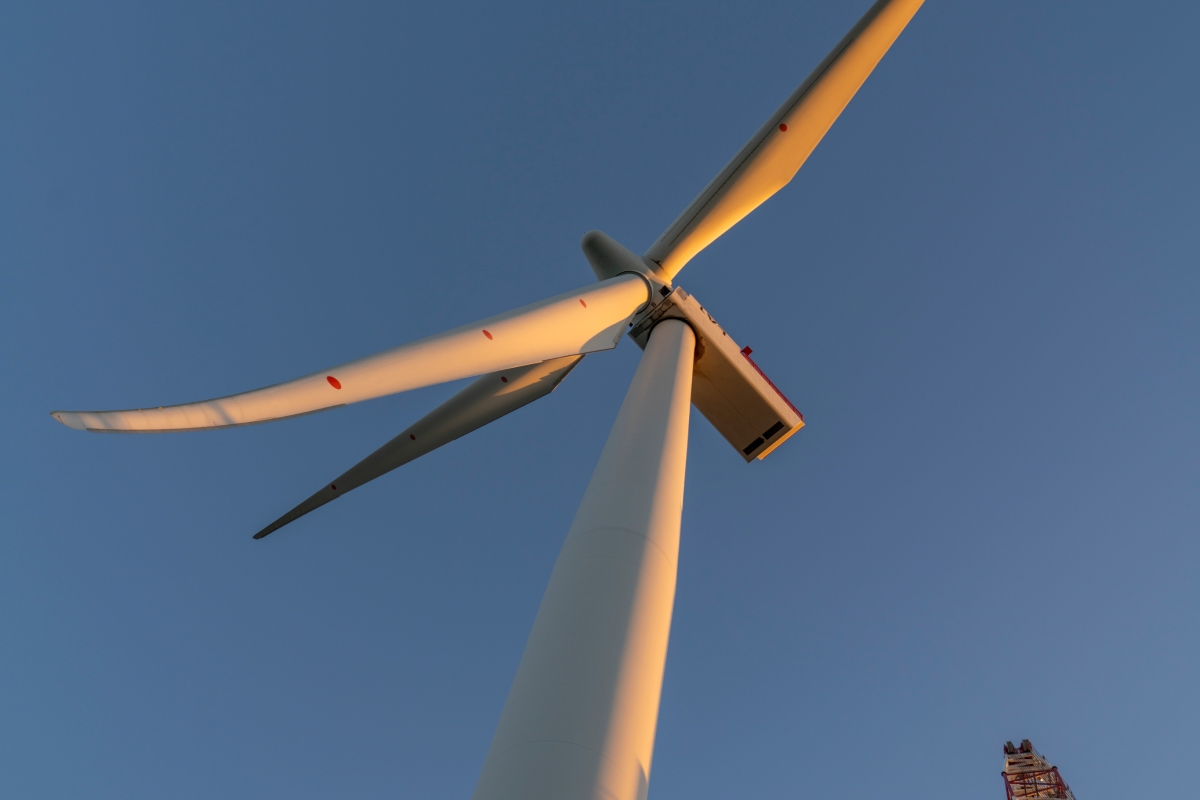
Although 85% of wind turbine materials are recyclable (e.g. steel, aluminium, copper), wind turbine blades are often made of composite materials that make conventional recycling challenging*. Developing cost effective methods for recycling wind turbine components is important to the economic viability of the wind energy sector, and crucial for creating a circular approach to waste management in the sector.
Between 2022 and 2024, we supported a £250,000 impact programme to fund and support academic research and non-profit projects that aimed to advance industry knowledge on turbine blade recyclability and repurposing.
One such project was with the University of Edinburgh, which was awarded a grant of £125,000 in October 2023 to research how old wind turbine blades could be recycled into powders that can be repurposed into surface coatings to prevent the corrosion and erosion of new blades. The Added-value Coatings project concluded in October 2024 and identified that successful grinding of recycled materials, notably carbon fibre and glass fibre, could be added to new turbine materials without compromising the blades’ physical properties. This research has demonstrated the potential for the industry to reduce costs and improve the environmental impacts of its wind turbine fleet.
Imperial College London was also awarded a grant of £111,000 for a research project to develop a user-friendly end-of-life decision making tool to predict how much damage a wind turbine blade has accumulated in its lifetime. The tool will support the wind industry in making informed decisions about the optimal end-of-life route for wind turbine blade materials. This project is ongoing and is expected to conclude in the spring of 2027.
The Pollinator Plan – an initiative to support bee populations
The Pollinator Plan is an initiative backed by over a hundred government and non-governmental organisations aimed at reducing the loss of essential pollinators and supporting healthy levels of bee populations. As part of the Plan, we’ve implemented numerous projects across our sites over the past two years.
In April 2024, we implemented a new project at the Humber Gateway O&M facility, following the success of projects on the Slieve Divena and Brockaghboy sites in 2023. Over 40,000 bees were introduced to the project space with the intention of creating a dedicated nature and wellness area. Alongside the bee hives, we built a wild garden area to support the food supply and encourage wildflower growth. The hives have flourished, producing approximately 250 jars of honey a year and the bee population is predicted to grow to 250,000.
This project is delivering positive impacts for biodiversity as well as employee wellbeing. On-site employees have been involved in tending to the bees under the supervision of a qualified beekeeper – they’ve said they enjoy feeling closer to nature, and having a peaceful place to sit outside.
During 2025, we intend to use the bees as part of our community engagement by encouraging site visitors and local schoolchildren to take part in our ‘bee schools’. This will help younger generations to connect with nature and learn about the importance of biodiversity. It also promotes greater understanding of wind farms and the diverse career opportunities within the offshore wind industry. We would also like to explore options for using the bees, and more specifically the harvesting of honey, to support charities around Grimsby.
Supporting community health and wellbeing
We recognise the importance of maintaining and enhancing good relationships with the local communities where our assets are located. This is key to our social licence to operate and our access rights, and to creating positive outcomes for local communities. In 2024, we invested £5.7m into community benefit funds and social projects. Two such projects from 2024 are shared below.
Brockaghboy Football Club funding
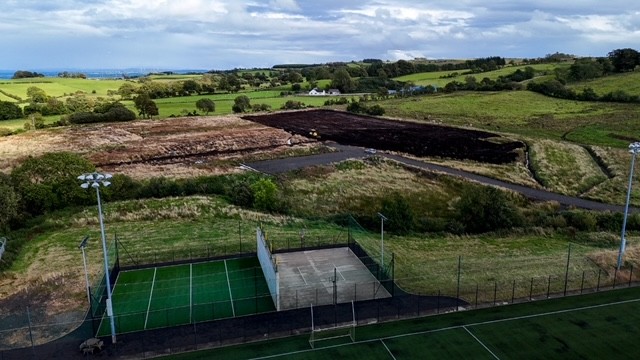
The Brockaghboy Football Club in Northern Ireland has been supported by the Company, through its investment in Brockaghboy Wind Farm, for many years. The club supports a diverse range of football teams for all ages and abilities, as well as boys and girls teams. Brockaghboy Wind Farm has previously funded the club with a gym, which provides fitness classes for members of the community.
Between 2024 and 2032, the club is being supported through the development of a state-of-the-art football pitch. A proportion of this project’s funding has been paid in advance and £46,368 has been spent to date. During 2024, the groundwork for the pitch was completed, and the Astroturf installed. Looking ahead to 2025, funding will be used to add fencing, floodlights and ball stops. A walking track will also be installed around the pitch. Once completed, these facilities will support hundreds of families across the community who will use the pitch for training, walking and socialising.
Howden Memory Café
In 2024, the Rotary Club of Howden in Yorkshire received funds to set up and run Memory Café, a support group for those affected by dementia. This is the only specialist dementia support group with a physical presence for people in the area surrounding the Sixpenny Wood Wind Farm. The group meets fortnightly, with an average of 30-40 attendees, and is supported by 16 volunteers.
The group allows affected individuals and their families to get together with volunteers to chat, participate in quizzes and have wellbeing time with mechanical cats. A mechanical cat, often used as a form of robotic therapy, can offer several benefits for individuals with dementia such as emotional comfort and companionship, reduction of aggression and memory stimulation.
The group applied for further funding at the end of 2024 and was awarded a grant to help with running costs in 2025. The group also hopes to participate in a dementia conference in 2025.
Peatland restoration
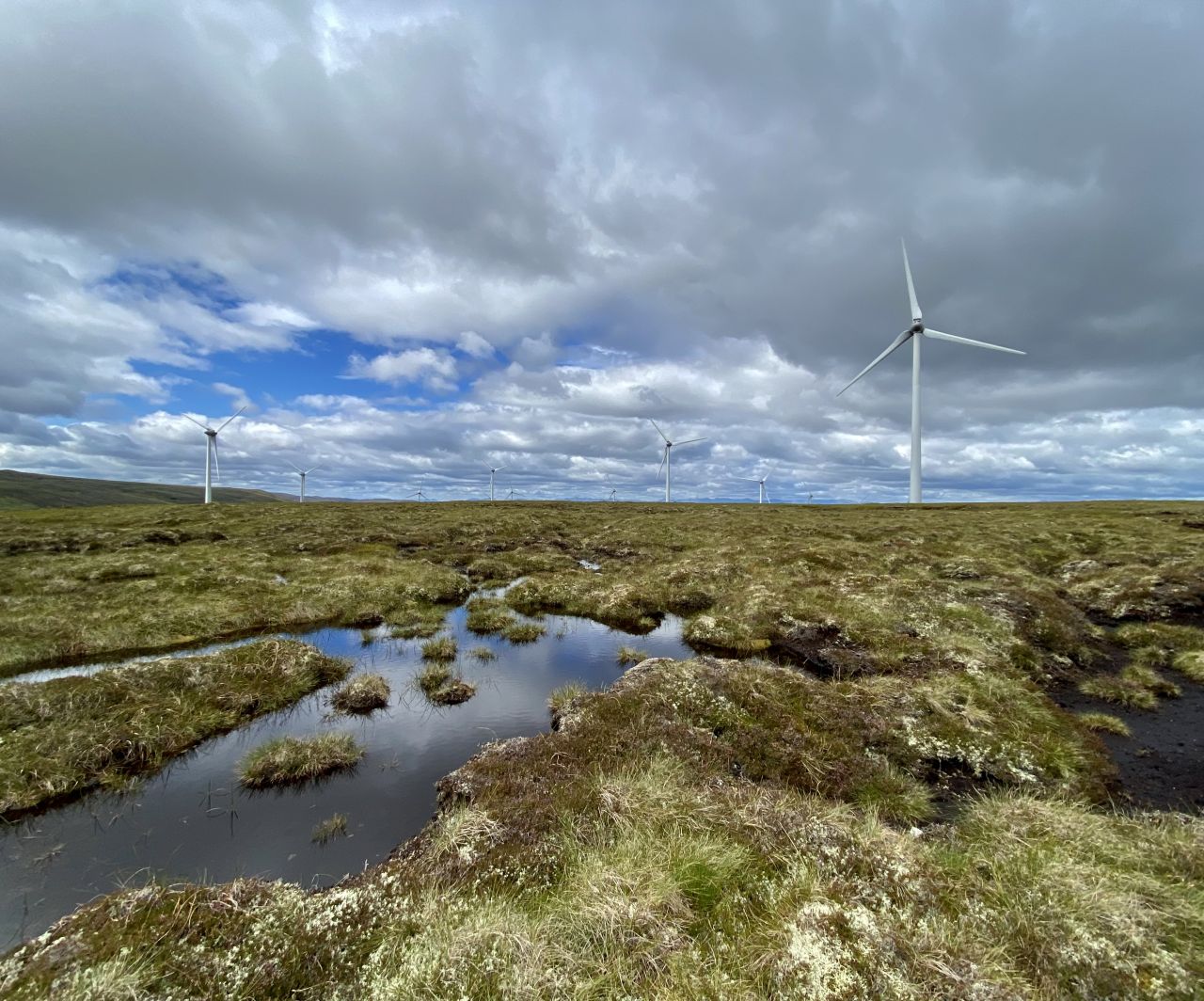
Many of our onshore wind farms are located on peatlands. Peatlands are a hugely important land type, holding large amounts of carbon for long periods, and supporting biodiversity by providing an important habitat. However, when damaged, peatlands release this carbon. This can easily happen through activities on the land, including overgrazing, burning, cutting, drainage and construction – including of wind farms.
Unless properly managed, the carbon released during construction can add several years to a wind farm’s carbon payback period, undermining the core objective of renewable energy generation – to reduce net GHG emissions. We therefore proactively manage peat restoration work on all our sites where peat is present.
One such site is Tom nan Clach in northern Scotland, where we’ve begun a multi-year process to monitor and restore peatland. In 2023, we first identified exposed peat which was at risk of erosion at the site, believed to have resulted from sheep trampling. Eroding peat is problematic as it undermines the stability of trackside embankments, leading to decreased water quality downstream, along with GHG emissions.
In 2024, monitoring surveys were carried out and an updated peatland restoration plan developed and implemented. Immediate actions following the implementation of the plan included the installation of temporary fencing to prevent sheep from accessing the eroding areas. Over the next few years, we will continue to monitor the area and consider longer term actions such as seeding or mulching to establish new vegetation.
* Recycling of wind turbine blades through modern recycling technologies: A road to zero waste, Renewable Energy Focus, Volume 44, 2023